
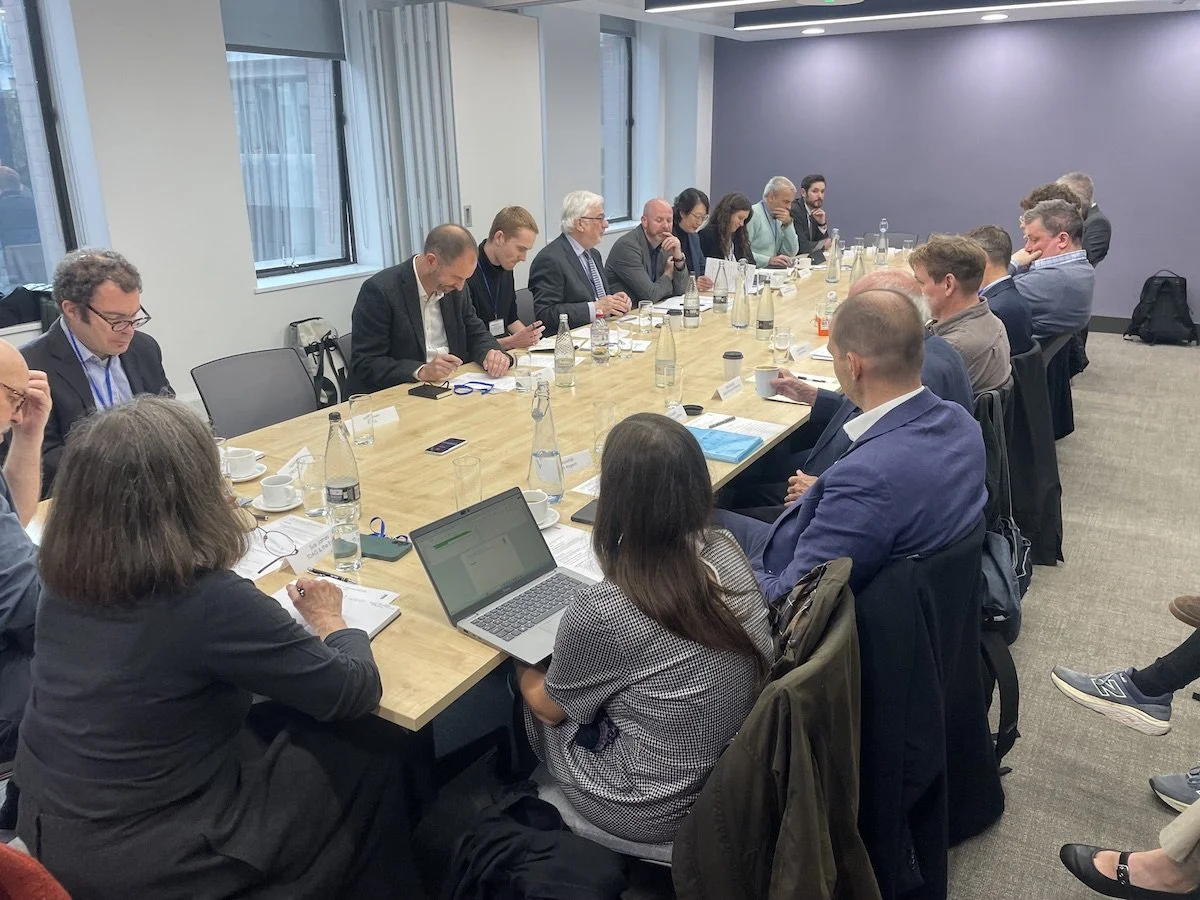
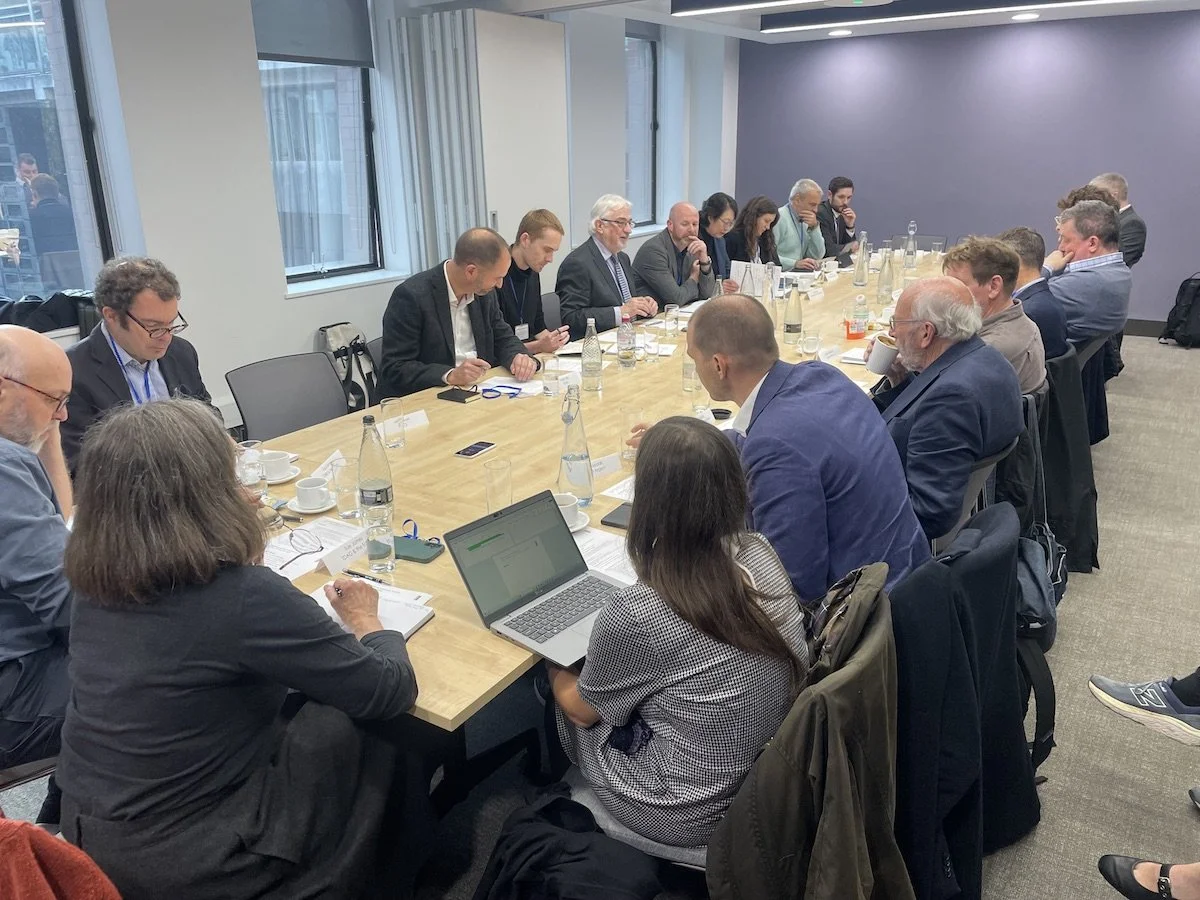
The Roundtable considered whether, or not, fundamental change is needed to create a planning system fit for tackling 21st Century challenges around climate, nature, prosperity and wellbeing. the Edge brought together a range of thinkers, from across the political spectrum and a variety of disciplines, who have expressed ideas about replacing, or radically reforming, the current planning system to consider both the future of the system instituted between 1945 (Distribution of Industry Act) and 1949 (National Parks and Access to the Countryside Act), and amended many times since, and the fate of several previous attempts to reform it, including:
Open-source planning (2010);
The Raynsford Review (2018) ; and
The Planning for the Future White Paper (2020).
as well as the findings of the recent Planorama review, (Centre for Cities , 2025) and views from across the spectrum from policymakers, policy implenters and those trying to develop and buld.
The discussion was not directly about planning policies, but rather the container which enables those policies and system intended to facilitate optimal use of land, delivery of policy and best outcomes for people and planet? It was also a discussion for the longer term, not an attempt to influence the current debate about the Planning and Infrastructure Bill 2025. Instead it explored both the past and the future of the system itself.
Roundtable Notes AI Summary & Podcast
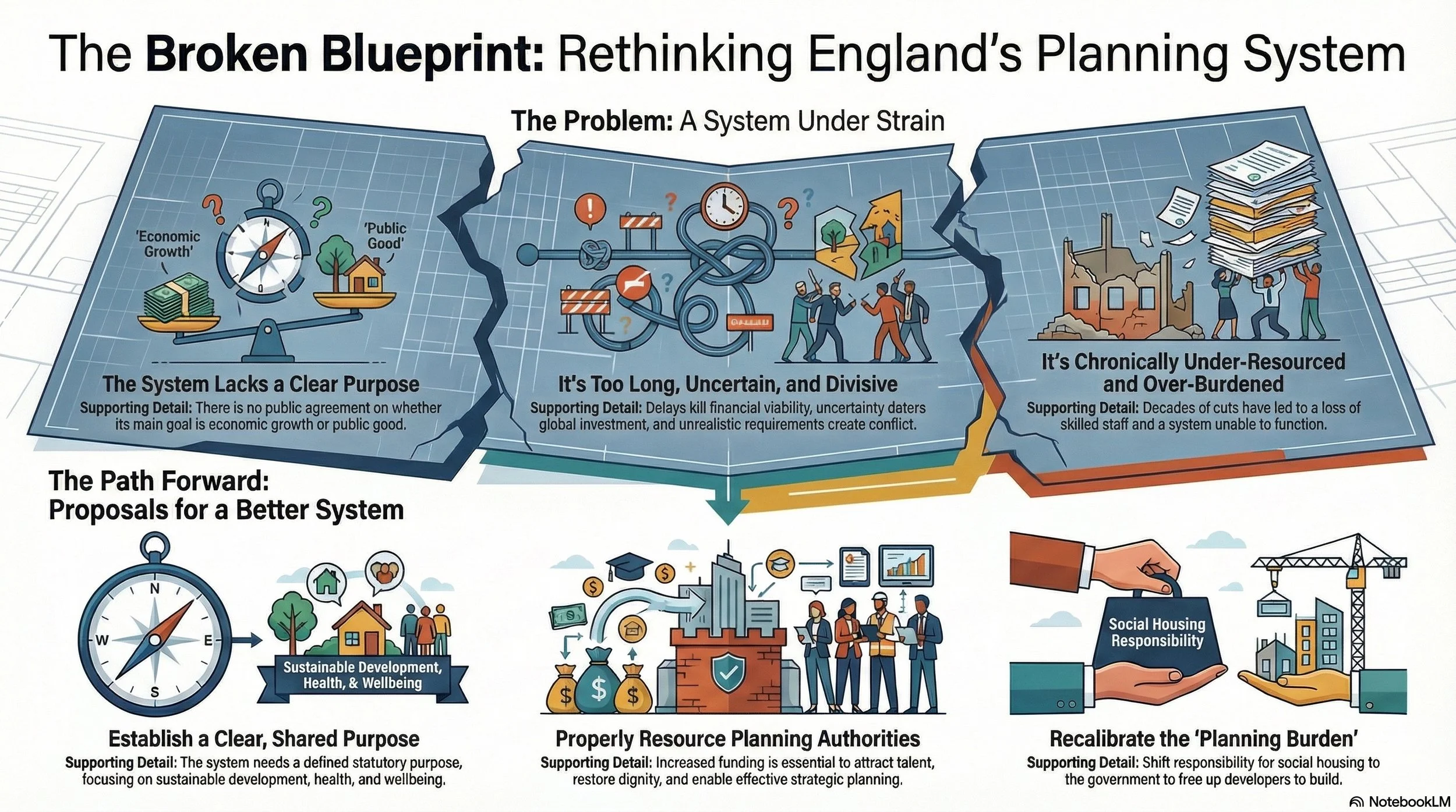
AI infographic summarising the discussion
AI Summary of the above - courtesy Google Notebook LM
This document synthesizes a high-level debate regarding the current dysfunction and potential reform of the English planning system. Experts critique the existing framework for being too slow, unpredictable, and divisive, noting that decades of under-resourcing and constant "tinkering" have eroded public trust and stifled economic growth. The text explores various historical and international models, weighing the benefits of discretionary systems versus rigid zoning to provide better investment certainty. Key perspectives from developers highlight how regulatory burdens and viability issues frequently halt essential housing delivery, particularly in London. Proposals for the future emphasize a need for a clear statutory purpose, focusing on sustainable development, technological integration, and strategic infrastructure. Ultimately, the source advocates for collaboration between the public and private sectors to move beyond bureaucratic box-ticking and toward a system that balances market needs with the public good.
A podcast based on the above - see below


Further reading
The English Planning System - a provocation, Dr Richard Simmons, October 2025, the Edge
Planning & Infrastructure Bill 2025 guide: https://www.gov.uk/government/publications/the-planning-and-infrastructure-bill/guide-to-the-planning-and-infrastructure-bill
Open Source Planning Green Paper: https://acert.org.uk/wp-content/uploads/2012/01/planning-green-paper.pdf
Planning 2020 - Final Report of the Raynsford Review:
Planning for the Future White Paper: https://assets.publishing.service.gov.uk/media/601bce418fa8f53fc149bc7d/MHCLG-Planning-Consultation.pdf
Planorama: How the English planning system can learn from abroad: https://www.centreforcities.org/publication/planorama-how-the-english-planning-system-can-learn-from-abroad/
And for those interested in the extreme sports end of the subject:
Institute of Economic Affairs: Land Use Planning
https://iea.org.uk/wp-content/uploads/2016/07/upldbook233pdf.pdf
Rethinking Planning
To renew the nation after World War 2 the New Towns Act 1946, Town and Country Planning Act 1947 and National Parks and Access to the Countryside Act 1949 revolutionised the planning and control of development in England, while aiming to protect nature and the countryside.[i]
Successive governments have tinkered with the 1947 system for ideological reasons and to adapt planning to society’s changing needs. Governments’ goals for planning have also shifted. The 1940s attempt to engender holistic planning has morphed into something more focused. Since 2010, governments have set just two primary goals: to build more homes and the infrastructure for a green energy transition.
To achieve this, the current Labour government is making more changes to the system through the Planning and Infrastructure Bill 2025,[ii] adjustments to the National Planning Policy Framework,[iii] and an assemblage of other initiatives.[iv] Controversy over Part III of the Bill arose because experts argued that its focus on the government’s goals was at the expense of nature recovery.[v]
We face a polycrisis. The government is right to push for more affordable housing. We must tackle the climate emergency, but we also face a devastating loss of biodiversity. We should ask if the current planning system can deliver on all these fronts, or if it has been patched up too often and is no longer fit for purpose.
This question does not produce easy answers. Libertarian economists have argued for many years for the market to be given primacy.[vi] Meanwhile, three alternatives for systemic reform have come to the fore in the last fifteen years, only to be set aside. The Conservative Party’s 2010 bottom-up ‘Open Source Planning’ proved impracticable.[vii] The TCPA’s 2018 Raynsford Review, advocating working with the market to promote wellbeing and sustainable development, fell on politically stony ground.[viii] Boris Johnson’s 2020 Planning for the Future White Paper’s simple zoning system was scuppered in part by backbenchers fearing voters’ reactions.[ix]
the Edge aims to reignite the debate. Do we continue to make do and mend, or can we create a different, simpler, more efficient and faster planning system that can deliver equally for climate, nature and people?
[i] Yvonne Rydin (1998). Urban and Environmental Planning in the UK. London: Macmillan, pp. 22-23.
[ii] https://www.gov.uk/government/publications/the-planning-and-infrastructure-bill/guide-to-the-planning-and-infrastructure-bill (accessed 18 June 2025).
[iii] https://assets.publishing.service.gov.uk/media/67aafe8f3b41f783cca46251/NPPF_December_2024.pdf (accessed 18 June 2025).
[iv] https://www.theyworkforyou.com/wms/?id=2025-06-02.hcws673.h&s=Land+Use#ghcws673.0 (accessed 18 June 2025).
[v] https://www.rskwilding.com/news/joint-statement-on-part-iii-of-the-planning-and-infrastructure-bill/; https://www.warwickshirewildlifetrust.org.uk/news/wildlife-trusts-call-out-inaccuracies-commons-debate-planning-infrastructure-bill (accessed 15 June 2025).
[vi] E.g., https://iea.org.uk/publications/research/the-land-use-planning-system (accessed 18 June 2025); Robert Jones (1982). Town and Country Chaos: A Critical Analysis of Planning in Britain. London: Adam Smith Institute.
[vii] https://acert.org.uk/wp-content/uploads/2012/01/planning-green-paper.pdf (accessed 18 June 2025).
[viii] https://www.tcpa.org.uk/wp-content/uploads/2022/03/Planning-2020-Raynsford-Review-of-Planning-in-England-Final-Report.pdf (accessed 18 June 2025).
[ix] https://assets.publishing.service.gov.uk/media/601bce418fa8f53fc149bc7d/MHCLG-Planning-Consultation.pdf (accessed 18 June 2025).