
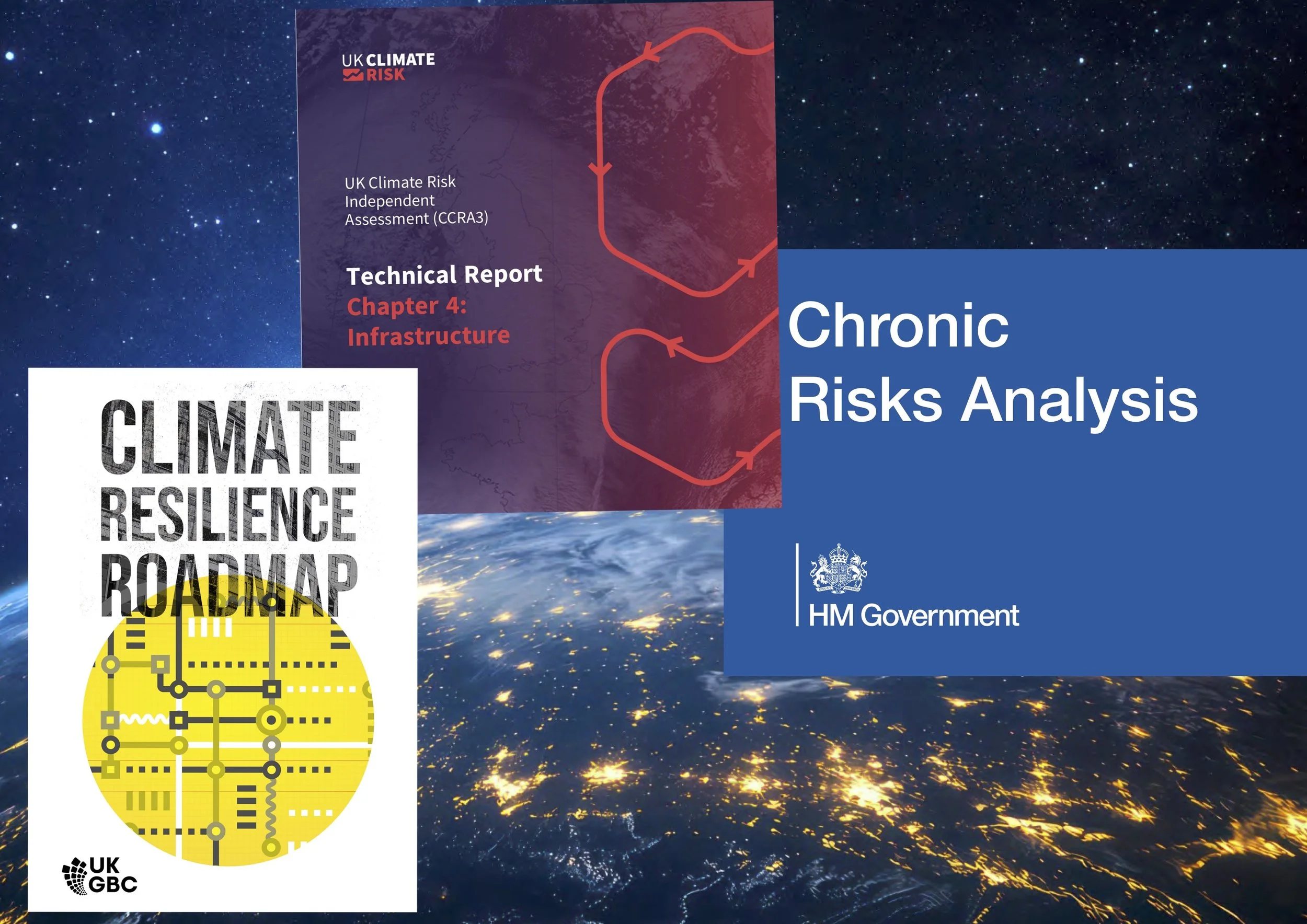
In recent years a far greater awareness of the need to factor risk into decision-making has taken root. In particular, the Covid 19 pandemic taught us the importance of anticipating and preparing for high impact but relatively low probability risks and ensuring that appropriate measures are put in place and then maintained with the express purpose of mitigating damage from, or even avoiding entirely, a wide range of possible future harms.
In the built and natural environment where projects have lives measured in decades, if not centuries, there is a need to anticipate events and environmental conditions long into the future and with the likelihood that even low probability events will eventually occur , especially when factors such as climate change, damage to natural systems and even inadequate maintenance are taken into account.
Risks include everything from cyber attacks, loss of financial confidence, infectious diseases and air pollution to breakdowns in infrastructure and supply chains as well as the more familiar dangers of flooding and overheating. Both short and long-term incidents can trigger rapid escalations of events resulting in widespread damage.
The sector needs to consider and factor in long-term risks when developing projects and in its advice and guidance to clients, investors and government. How should this be approached? What skills are needed - not only to design for climate change, but to actively plan for the full range of risk impacts in the years ahead?
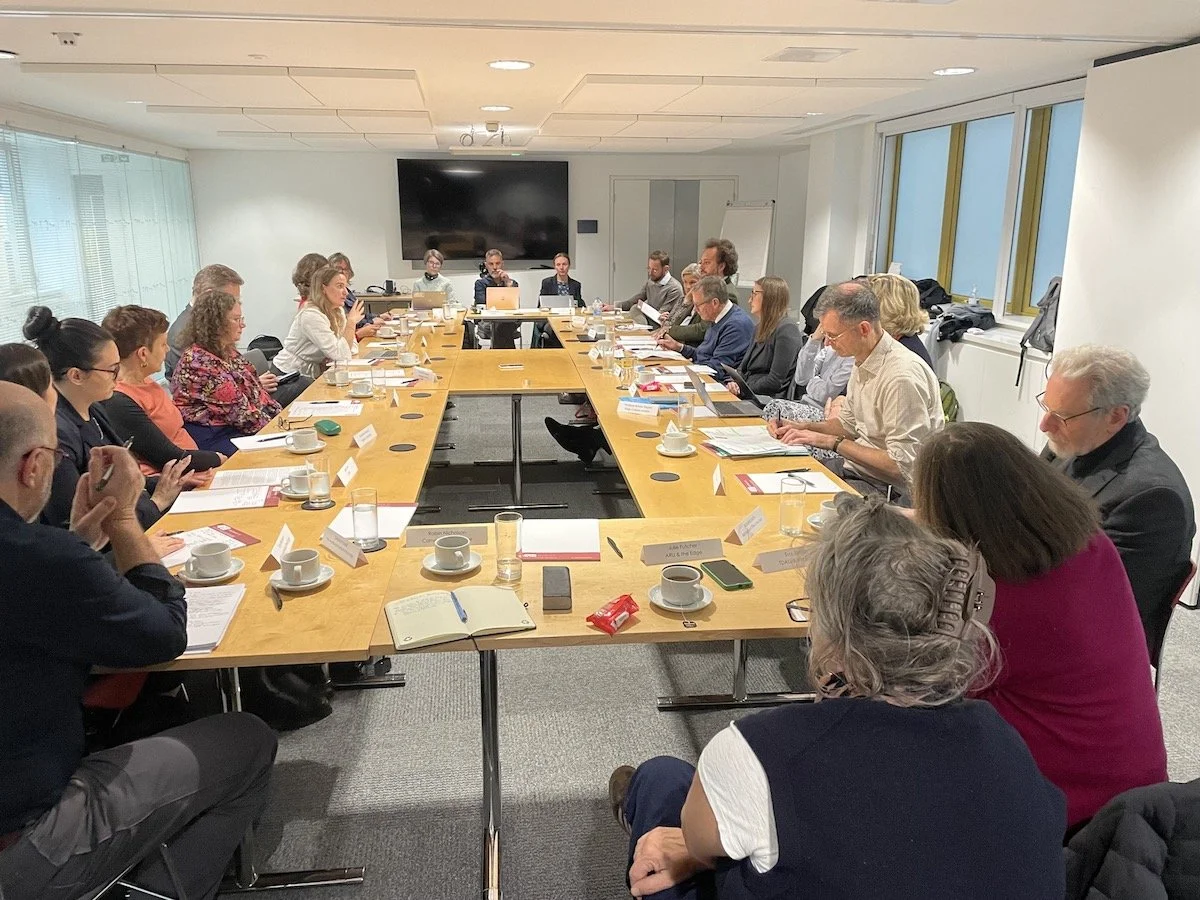
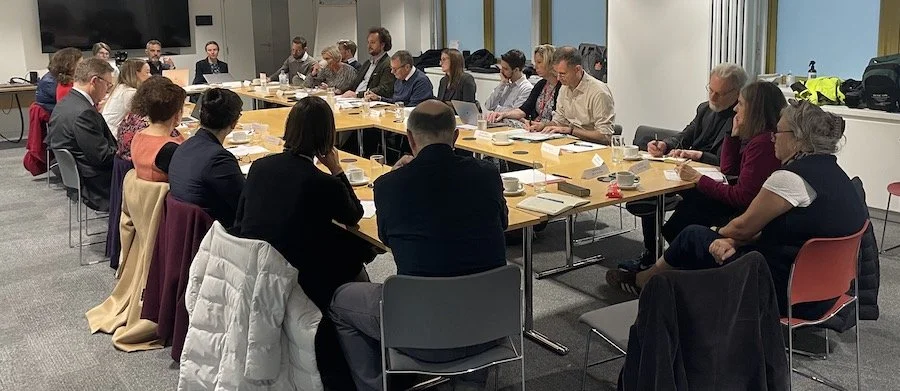
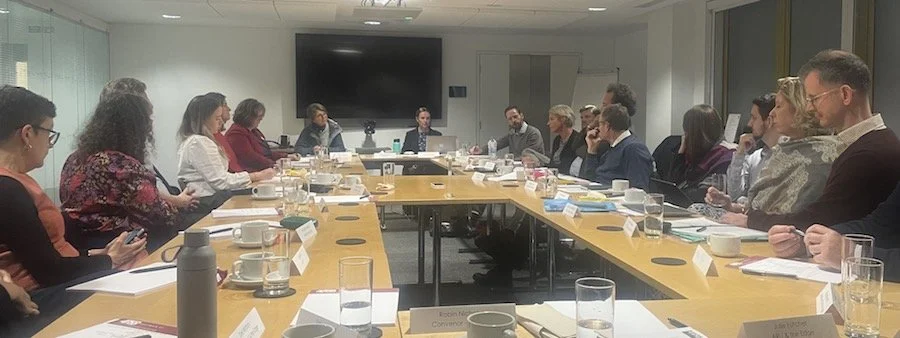
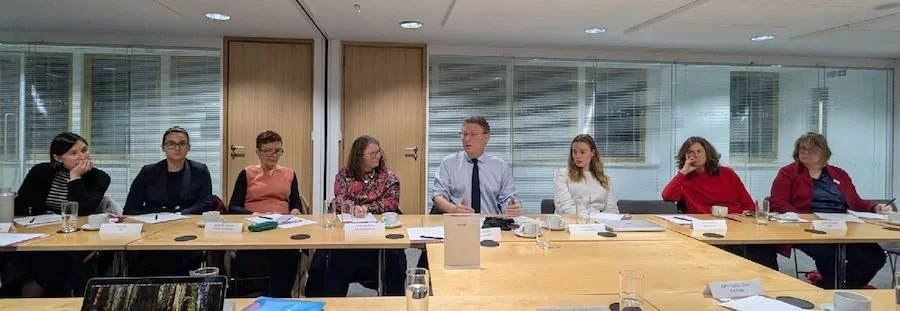
The Roundtable addressed four key areas, with invited speakers on each, followed by a wider discusion. The topics are:
1. Environmental and climate-based risk
2. Infrastructure failure and outages
3. Finance and insurance
4. Designing for risk
Venue: The Institution of Structural Engineers,
Time & date: 15.00 - 17.30, 27th November 2025
Roundtable Notes AI Summary & Podcast
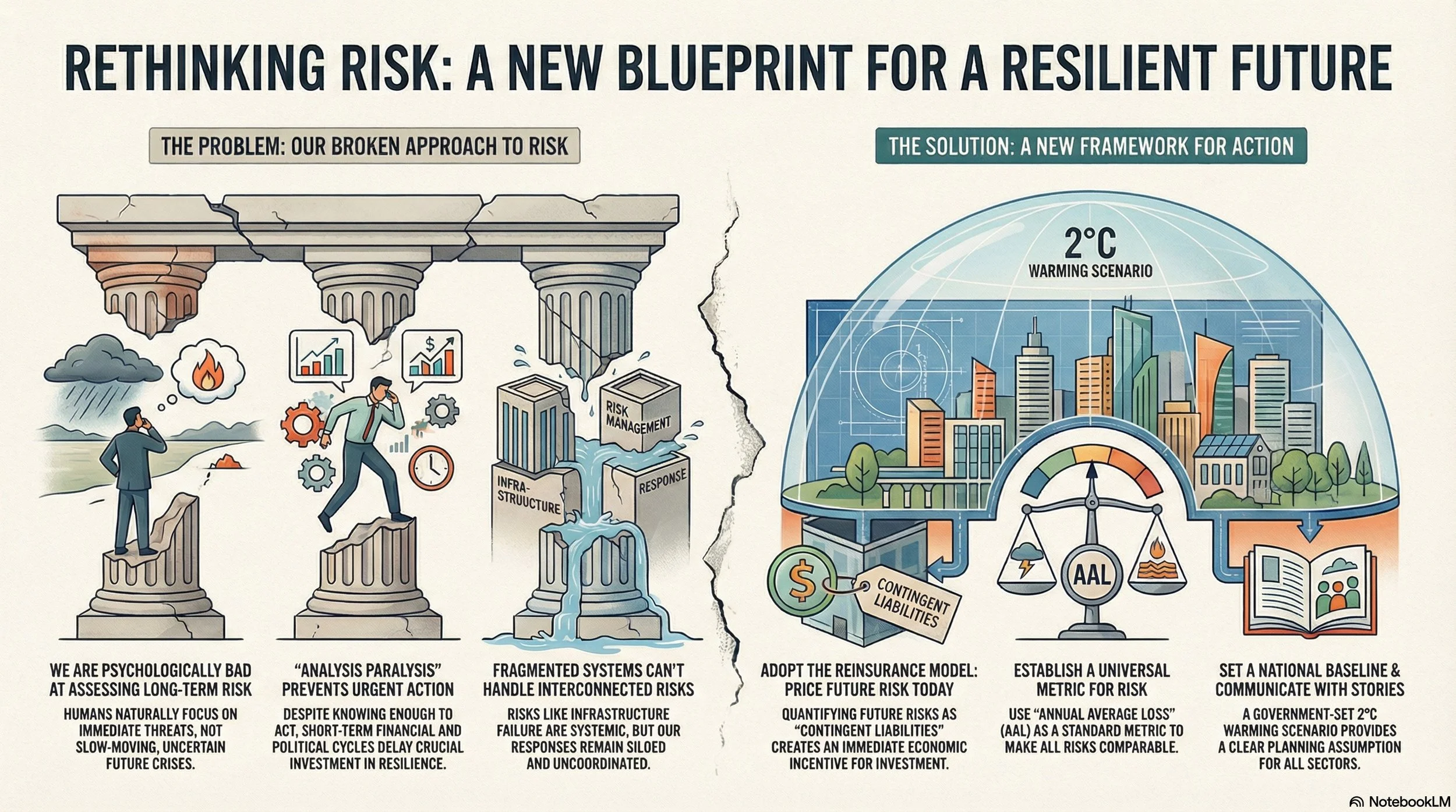
AI infographic summarising the discussion
Long form notes of the discussion on long-term risk
AI Summary of the above - courtesy Google Notebook LM
This report examines the urgent necessity of addressing long-term environmental risks within the built environment and national infrastructure. It contrasts acute risks, like sudden disasters, with chronic risks, such as climate change, emphasizing that persistent threats require a systems-based approach and new design standards. A significant portion of the discussion explores how the reinsurance sector uses catastrophe modelling and "annual average loss" metrics to put a financial price on vulnerability, potentially catalysing investment in resilience. The text advocates for improved communication to bridge the gap between public perception and scientific reality, suggesting that localized storytelling is more effective than abstract data. Ultimately, the sources call for a unified 2°C baseline scenario to guide government policy and professional training, ensuring that mitigation and adaptation strategies are implemented in tandem.
A podcast based on the above - see below
References:
Chronic Risk Analysis, Cabinet Office, Government Office for Science and Foresight, July 2025 https://assets.publishing.service.gov.uk/media/6890acc9e8ba9507fc1b09a6/Chronic_Risks_Analysis__CRA_.pdf
Climate Change - A Risk Assessment, King D,. et al, (2015) - https://www.researchgate.net/publication/280881788_Climate_change_a_risk_assessment
UK Climate Risk Independent Assessment (CCRA3), UK Climate Risk (2021) - https://www.theccc.org.uk/wp-content/uploads/2021/07/Independent-Assessment-of-UK-Climate-Risk-Advice-to-Govt-for-CCRA3-CCC.pdf
Preparing for Extreme Risks: Building a Resilient Society, House of Lords ((2021) - https://publications.parliament.uk/pa/ld5802/ldselect/ldrisk/110/110.pdf
National Risk Register, Cabinet Office (2025) - https://assets.publishing.service.gov.uk/media/67b5f85732b2aab18314bbe4/National_Risk_Register_2025.pdf
The concept of risk in the IPCC Sixth Assessment Report, IPCC, (2020), https://www.ipcc.ch/site/assets/uploads/2021/02/Risk-guidance-FINAL_15Feb2021.pdf
UK Climate Resilience Roadmap, UKGBC, 2025, https://ukgbc.org/our-work/topics/resilience-roadmap/