Edge Events


Apr
18
11:00 AM11:00

Futurebuild + UK Construction Week Arena Conference: Day 1 - 12th May

Edge Debate 194: The Circular Economy – how the built environment can make it a growth economy  

The concept of a ‘ circular economy’ is not new. The formation of a Circular Economy Taskforce by the then Secretary of State at Defra provided the impetus to explore  how to put this into practice across the built and natural environment and the government has plans to publish its Circular Economy Growth Plan early in 2026, where the built environment should feature as one of the key sectors.

 This session at Futurebuild provides an opportunity for our sector to demonstrate how we can contribute to a growth economy based on circularity principles.

Chair:

David Greenfield, President of the Chartered Institution of Waste Management (CIWM), Managing Director, SOENECS and member of the Circular Economy Taskforce

Speakers:

Libby Peake, Taskforce member and Senior Fellow and Head of Resource Policy, the Green Alliance  

Katherine Adams, Co-Chair Green Construction Board Resources, Waste and Circularity Group  and  Co-Founder of  Reusefully

Jason Millett, Group Chief Executive, Mace Group  

Yetunde Abdul, Director of Industry Transformation, UK Green Building Council (UKGBC)

Eoin Bailey, UK Innovation Manager and Circular Economy Lead, 7 Steel

Tuesday 12th May 2026, 10.30-11.30, ExCel, London

——————————————————————————————————————————————-

Edge Debate 195: Reuse in practice – the multiple social, environmental and economic benefits of reusing buildings

Time is not on our side if we are to seriously change the direction in which we are moving in terms of the multiple social, environmental and economic crises that climate change is causing and will increasingly cause over time. As designers, we have a major contribution to make and one of the critical ones is protecting resources and this includes our existing buildings. Taking a leaf out of the book of architects such as Anne Lacaton and Jean Philippe Vassal, the first principle should be ‘never demolish’ but seek transformation over demolition.


In this conversation, Chris Williamson, President, Royal Institute of British Architects (RIBA) discusses the practicalities, opportunities and positive outcomes that can be achieved with:

Mina Hasman, Sustainability Director, SOM and Chair, Climate Action Group

James McCosh, Principal, VHH Architects

Gary Elliott, Chief Executive and Founder, Elliott Wood

Tuesday 12th May 2026, 11.45-12.30, ExCel, London

——————————————————————————————————————————————-

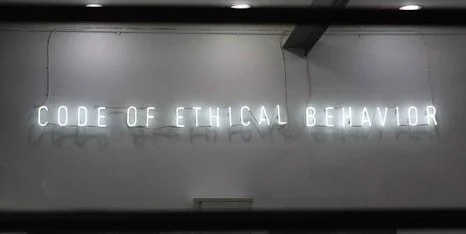
Edge Debate 196: Ethics, codes, and the urgent dilemma for practitioners and professionals - Understanding our collective and individual responsibilities

With an ever-growing list of polycrises to tackle, how do we make the right decisions as to what we work on, how we push back with our clients, and how we treat one another along the way?  While an institution or company director can never dictate what is and isn’t ethical, perhaps it can and should mandate that we engage with the topic.  Debate and research led by the Institution of Structural Engineers and Institution of Civil Engineers in 2025 identified a series of common dilemmas with which design professionals must engage if they are to best serve the public – from over-demolition and over-design to procurement failures and short-term finance. In this session, we will ask participants to share practical examples of how we can enable each other to speak up, challenge bad briefs, discuss the difficult topics, and make a stand when the projects we surround ourselves with start turning unethical.

Chair:

Efrosyni Konstantinou, UCL, Director of Ethics, Bartlett School of Sustainable Construction, UCL 

Speakers:

Carys Rowlands, Head of Professional Standards, Royal Institution of Chartered Surveyors

Chris Wise, Senior Director, Expedition, and Fellow of the Institution of Structural Engineers and the Institution of Civil Engineers

Mark Nason, Head of Professional Practice, Chartered Institution of Ecology and Environmental Management (CIEEM)

Saul Humphrey, Senior Vice-President, Chartered Institute of Building  (CIOB)

Tuesday 12th May 2026, 12.45-13.45, ExCel, London

View Event →
Apr
18
10:00 AM10:00

Futurebuild + UK Construction Week Arena Conference: Day 2 - 13th May

Edge Debate 197: Practicing regeneratively – mindsets, methods and magic

What does ‘regenerative design’ actually mean, and how can we put it into practice, regardless of context?  Our contention is that it is possible to embed regenerative practices into all aspects of design and construction – aiming not to ‘create a regenerative design’ as an outcome but instead focussing on the act of ‘designing regeneratively,’ or more broadly: ‘practicing regeneratively.’ In this series of quick-fire pecha kuchas, our invited experts will each speak to the act of design – a verb, rather than a noun – and share their tips for embedding practices and approaches that can help projects to reach beyond traditional sustainability, and work towards enabling human and living systems to thrive and co-evolve. They will each share the ways in which they are approaching this critical topic in their work, and give away all their secrets for embedding regenerative practices into everything they do, and creating that little bit of magic and wonder on our projects.

Chair:

Isabel Allen, Editor, Architecture Today


Speakers: 5 experts in ‘pecha kucha’ style session –

Will Arnold, Head of Sustainable Materials, Useful Simple Trust

Gary Clark, Principal and Managing Director of HKS London and co-author of the RIBA Sustainable Outcomes Guide

Brogan MacDonald, Head of Sustainability, Ramboll 

Carl Walker, Head of Societal Insights, Hoare Lea   

Anna Hollyman, Co-Head of Policy and Places, UK Green Building Council (UKGBC )

 Wednesday 13th May 2026, 12.30-13.30, ExCel, London

———————————————————————————————————————————

Edge Debate 198: Regenerative reflections

A conversation about the economic, social and environmental challenges and benefits of regenerative design and practice


Julia Barfield, Director, Marks Barfield and steering group member of Architects Declare in conversation with:

Oliver Broadbent, Founder, Constructivist and author of The Pattern Book for Regenerative Design

Zoe Watson, Senior Consultant – Bioregional, Trustee and Steering Group member – Architects Declare

Leonora Grcheva, Cities and Regions Lead, Doughnut Economics Action Lab (DEAL)


Co-curated with Architects Declare

Wednesday 13th May 2026, 16.00-17.00, ExCel, London

View Event →
Apr
9
to Apr 18

Futurebuild + UK Construction Week Arena Conference: Day 3 - 14th May

Edge Debate 199: Climate action is the new normal…it’s the economy sensible!

Despite the sound and fury of culture wars, dealing with climate change is now a clear political and economic imperative, increasingly framed by the need for greater energy security. While a majority of the UK public remains concerned about climate impacts, the overall sense of urgency has recently declined; the sector must now navigate a space where broad support for the end goal of net zero co-exists with growing division on how and when we get there. How should industry respond to the powerful economic arguments for change while engaging a public whose views are shifting? What are the new norms?

Chair: 

Rachel Brisley, Head of Planning and Place, Ipsos

Speakers:

How is the economy responding and how should it respond into the future?

Swenja Surminski, Professor in Practice at the Grantham Research Institute on Climate Change and the Environment, LSE and  Managing Director Climate, Marsh McLennan

In response, how are businesses of all sizes gearing up and why?

Stephen Hill, Associate Director, Arup 

Sarah Castle,  Co-founder and Director, IFDO


How is the investment market responding?

Joe Jack Williams, Head of Sustainability, Bywater

Louise Clarke, Group Head of Sustainability, Berkeley Group

Thursday 14th May 2026, 10.30-11.30, ExCel, London

Reference publications:

·       Electric Economy

·       Public attitudes to net zero and climate policy

————————————————————————————————————————————

Edge Debate 200: What should 2030+ look like?

2030, along with 2050, have long been held as significant dates in climate change and nature recovery action planning. As each year moves towards the first of these seminal dates, the important of achieving change becomes ever more urgent. We know that delivering positive solutions will need effective collaboration and a shared vision. We invited 6 young professionals in architecture, engineering, construction, development, planning and nature-based solutions to share their visions.

Chair:

Simon Rayner, Policy Analyst, Climate Change Committee

Speakers:

Munashe Mhemba, Graduate Planner, Marrons and Building the Future Young Planner of the Year 2025 

Darcy Arnold-Jones, Architect and Circular Economy Lead – Marks Barfield, member of the Edge,  the Circular Do Tank and Architects Declare

Kimberley Ertl, Engineer and Senior Sustainability Consultant, Expedition Engineering

Thomas Yunqing Bai, Associate and BIM Practice Lead, Ares Landscape Architects, Member of the Landscape Institute’s Knowledge and Practice Committee

Ahmed Gilani,  BEng Architectural Engineering, VP Construction Society, University of Reading and Constructionarium alumnus

Joe Carter, Design Manager, Criterion Capital and member of YADA

Thursday 14th May 2026, 14.30-15.30, ExCel, London

View Event →
Mar
26
to Mar 27

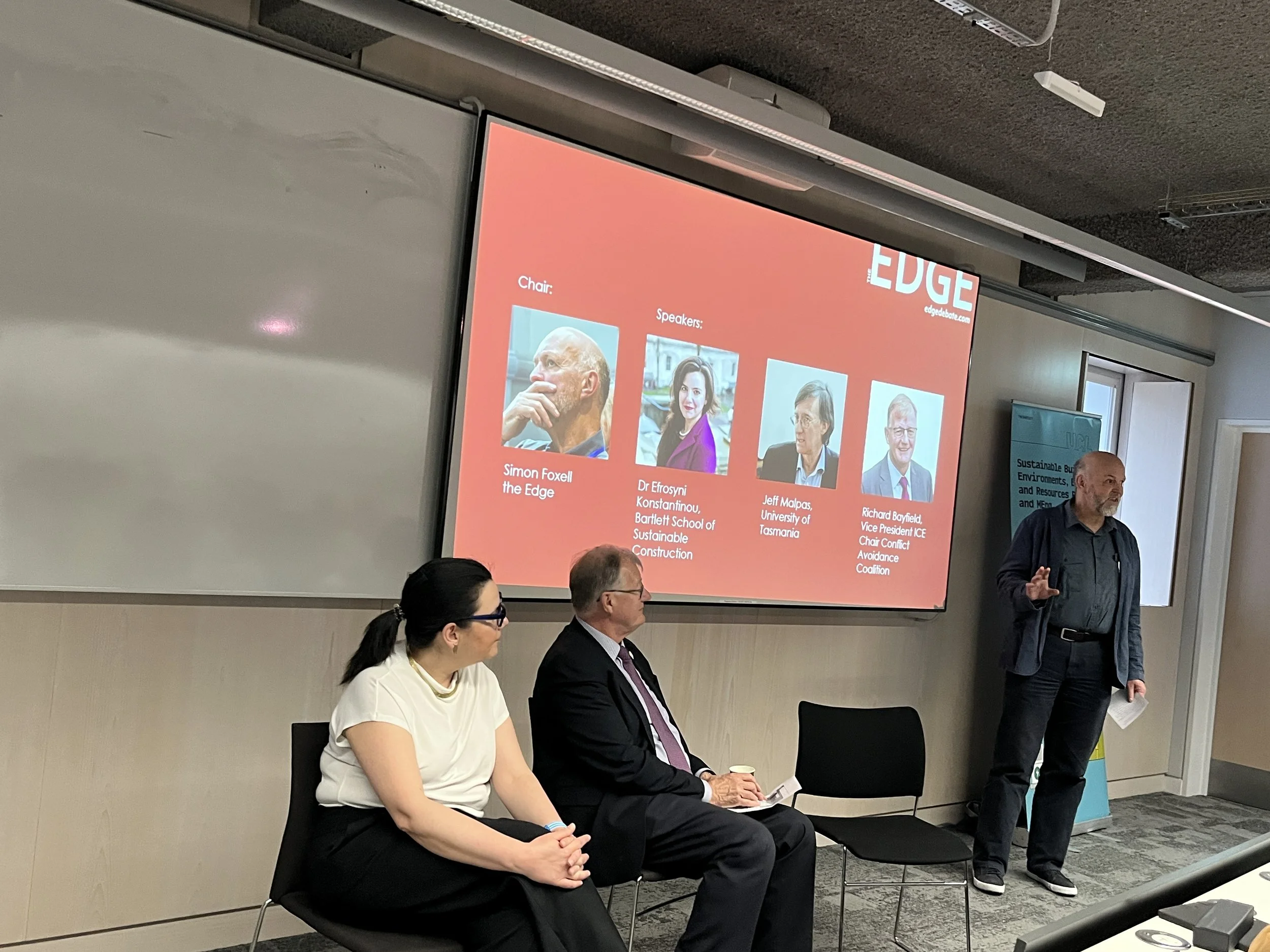
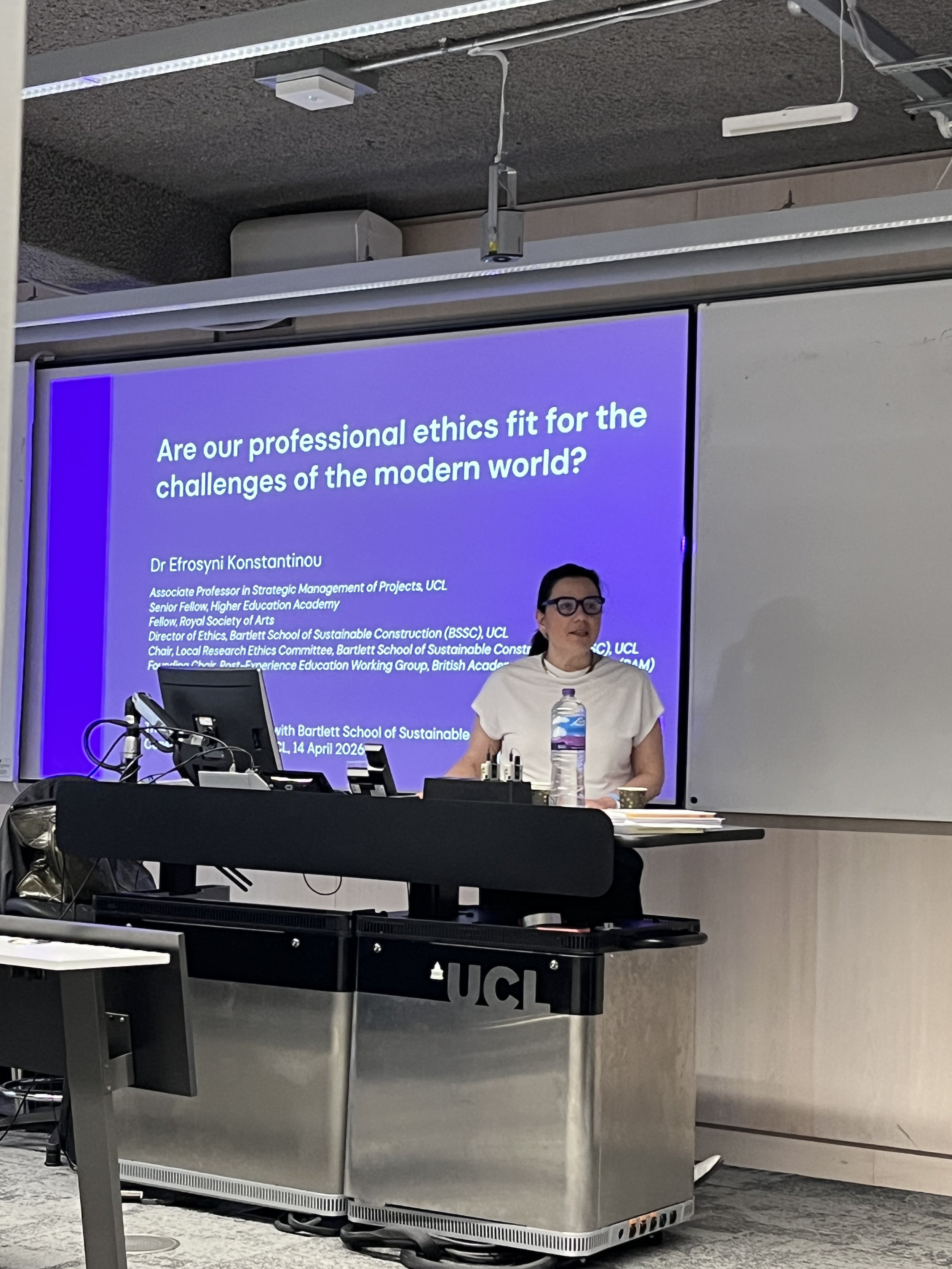
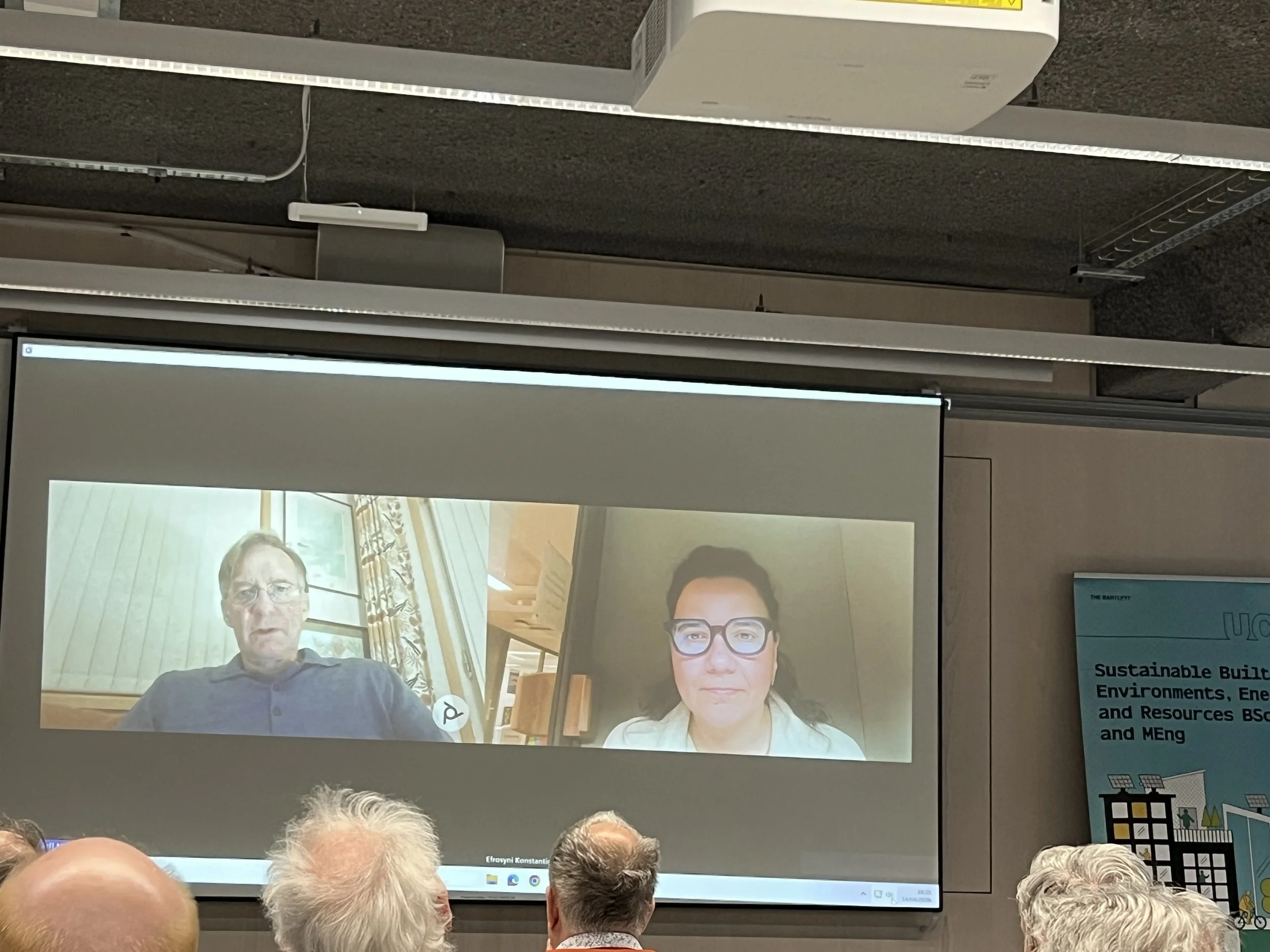
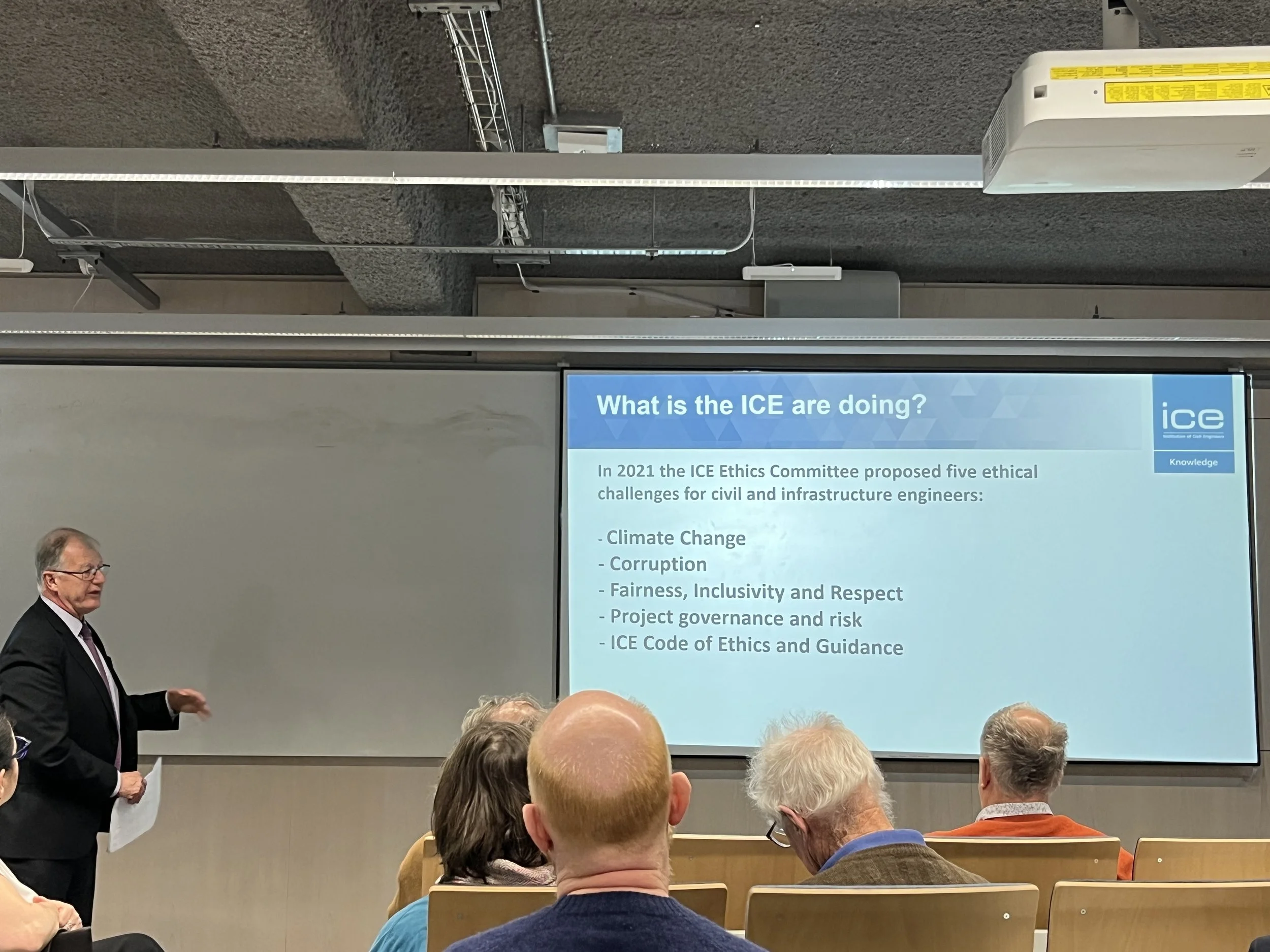
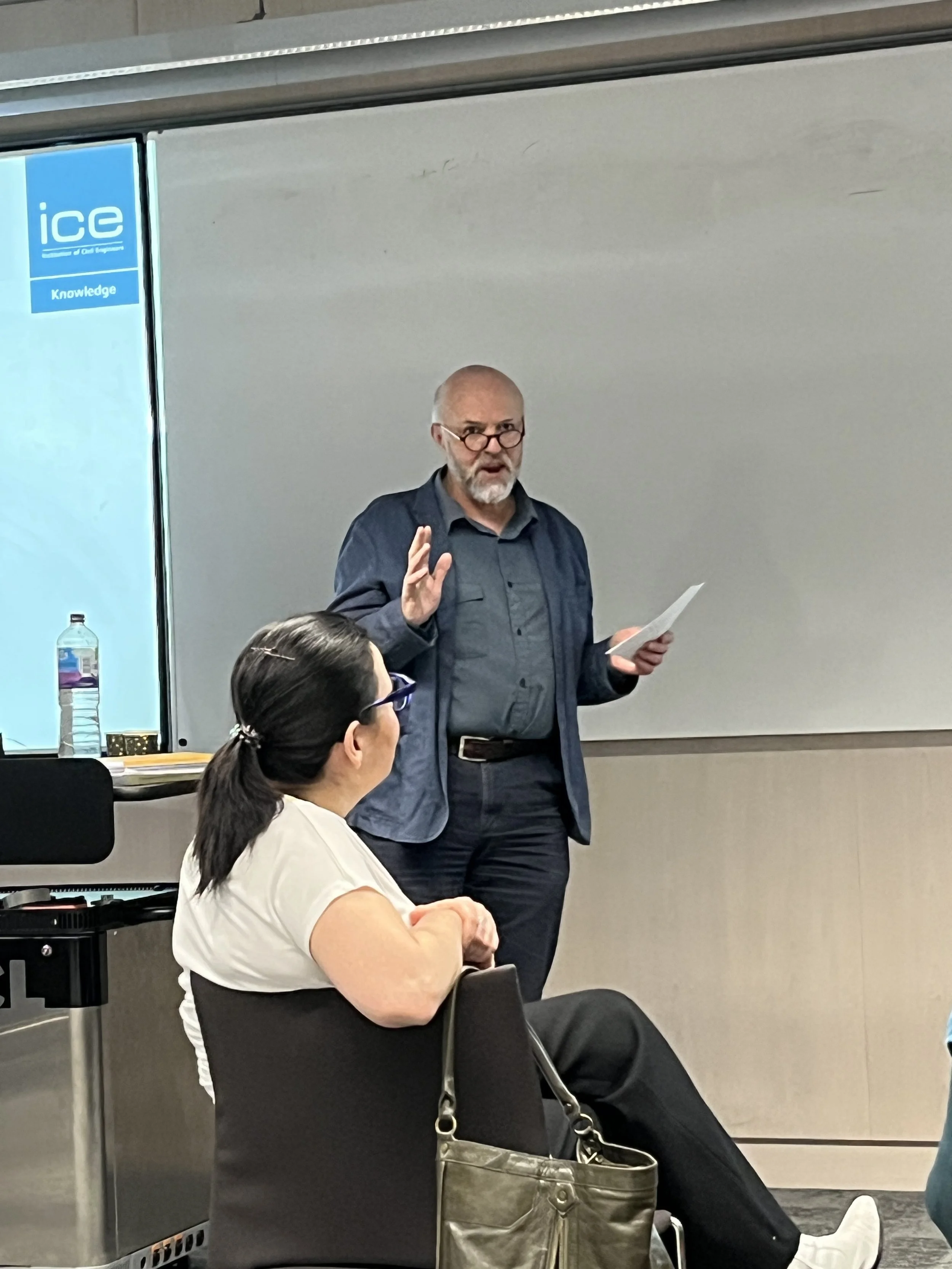
Edge Debate 193: Are our professional ethics fit for the challenge of the modern world? 14th April 2026, 18.00 – 20.00

  • Google Calendar ICS

Codes of ethics are a background to many of our lives and individually we may be required to comply with many different codes. But what are they really for? They are most frequently brought out when wrongdoing is suspected, but could they also be positive forces for change in our complex, conflicted world?

Might overhauling the collective ethics of the built and natural environment sector be a means for the professions to develop a trusted role in society, en route to being part of the solution to environmental and social problems?

Recently the growing urgency for creating a safer, sustainable, equitable and prosperous world has led to arguments for such codes to deliver far more significant outcomes.

The debate will ask whether professional ethics:

·            should be radically strengthened in the face of multiple, interdependent crises?

·            can be framed to help professions play a more strategic role in society?

·            might transcend professional, disciplinary, sectoral or national boundaries?

·            should be used to encourage social transformation and betterment?

·            potentially threaten the autonomy and moral agency of individual professionals?

Ethics is a sensitive, often contentious, and sometimes deeply personal issue. Yet, it is also societal, and frequently, a political or legal matter. It can unite and divide, empower and constrain, even discipline. It may be embodied in practice or ignored entirely. Ultimately, who is the ‘professional’; a self-interested, economic actor or someone responsible for navigating forces and obligations that extend far beyond their control? 

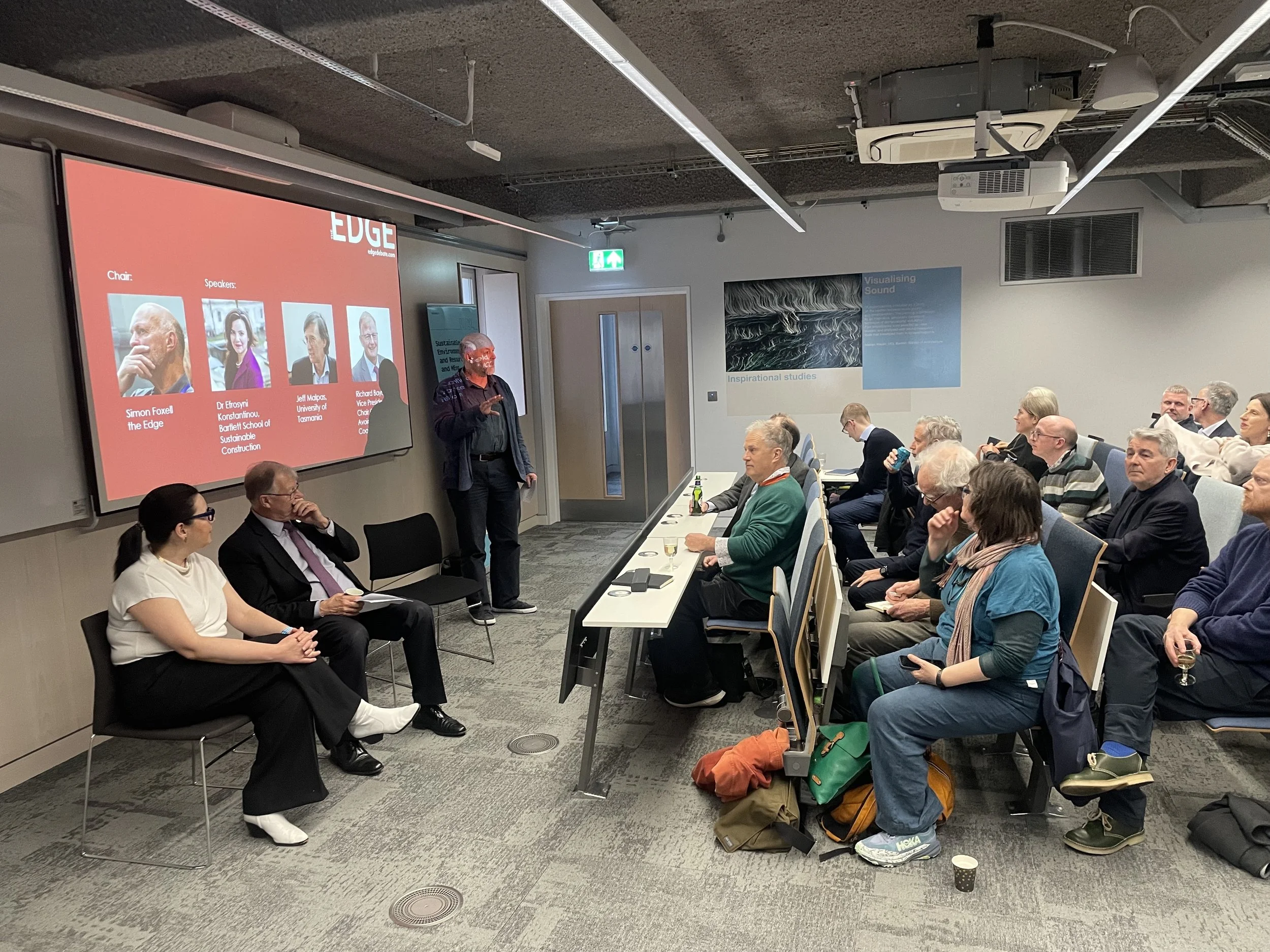
Chair: Simon Foxell, the Edge & Author of Professionalism for the Built Environment

Speakers:

Dr Efrosyni Konstantinou, Director of Ethics at the Bartlett School of Sustainable Construction

Richard Bayfield, Vice President Institution of Civil Engineers (ICE), Chair Conflict Avoidance Coalition 

Jeff Malpas, Emeritus Distinguished Professor, University of Tasmania

Venue:  UCL, Room 225, Central House,

14 Upper Woburn Place, London WC1H 0NN

Time & date: 17.30 for 18.00 – 20.00, 14th April 2026 (in person only)

Event registration at: https://ED193-Professional_Ethics.eventbrite.co.uk


View Event →
Mar
26
6:00 PM18:00

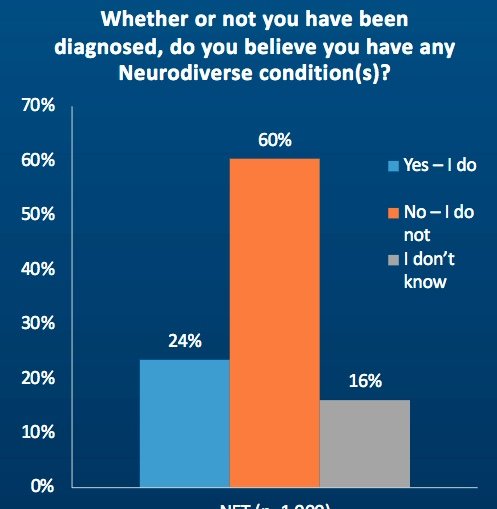
Edge Debate 192 - Neurodiversity: How can we go from awareness to change?

The built environment sector has been making significant progress in raising awareness and understanding the benefits of diversity and inclusion, but how do we move beyond intent and slogans to measurable change?

Cognitively diverse teams enhance innovation, retention, and resilience in ways that resonate with architects, engineers and others across the sector – so how can we embrace neuroinclusion and increase levels of psychological safety in our workplaces?

Neuroinclusive design principles—clarity, predictability, sensory balance, and refuge spaces—also support safe, usable environments for women and other underrepresented groups. Lighting, sightlines, acoustics, layout, and wayfinding shape whether people can navigate and participate effectively.

  • Do we need to measure inclusion and safety to the same

  • extent we measure carbon and cost?

  • Can we elevate neuroinclusion from aspiration to established practice, embedding it within professional norms?

  • Can we move from narrative-driven DEI to evidence-driven inclusion science, focusing on the practical frameworks, diagnostics, and metrics to achieve measurable change?

This debate, in the wake of Neurodiversity Celebration / Awareness Week, asks how neurodiverse thinking can be recognised not as an adjustment, but as a catalyst for innovation and better outcomes.

Chair: Stephen Gill, Consultant & founder of Engineering Differently

Speakers:

  • Professor Tadj Oreszczyn, Professor of Energy and Environment & Director UCL Energy Institute, University College London

  • Naomi Glover, Neuro-informed Ltd & Kings Entrepreneurship Institute

  • Peter Anderson, Chair - Troup Bywaters + Anders LLP

  • Daisy March, EDI Manager, Institution of Engineering and Technology

  • Martin Griffiths – Principal Geotechnical Engineer, GHD

Venue: CIBSE, 91-94 Saffron Hill, London EC1N 8QP

Date: 26th March 2026

Downloads:

ED192 - Debate report

ED192 - Neurodiversity - Invitation

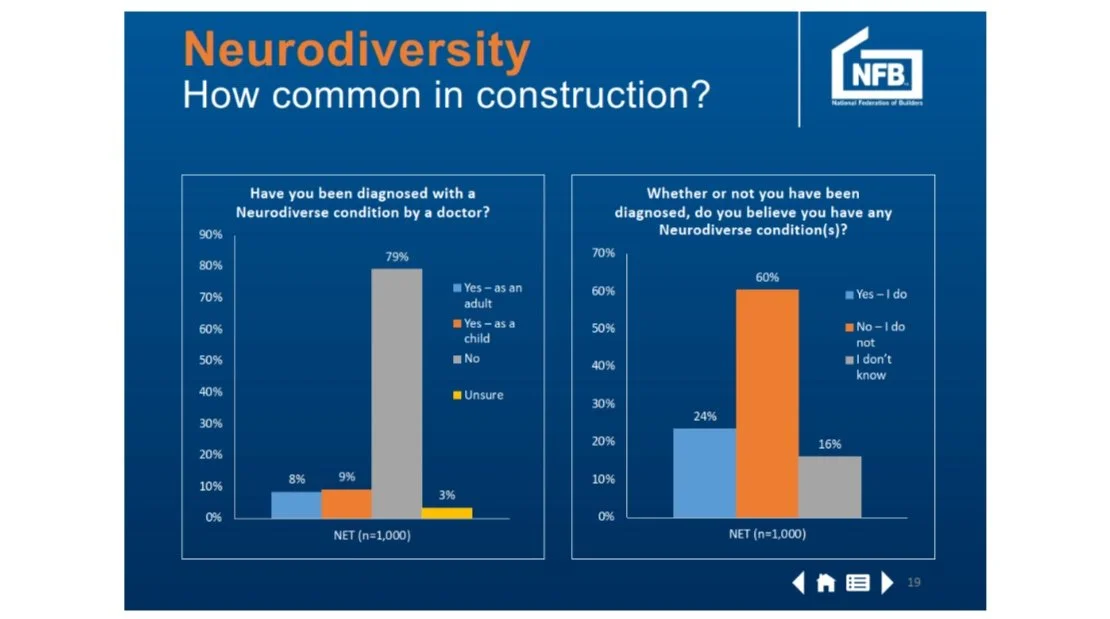
Neurodivergence in the construction industry - NFB

Opening up building services to neurodiverse engineers, CIBSE Journal, Jan 2022

Design for the Mind. Neurodiversity & the Built Environment - PAS 6463, BSI

Neurodiversity - selected references

Extended reading list:

Cultural Reframing & Neurodiversity

NeuroTribesSteve Silberman
Reframes neurodivergence as difference rather than deficit.

Divergent MindJenara Nerenberg
Explores gendered and intersectional dimensions of neurodivergence.

Cognitive Diversity & Innovation

The Neurodiversity EdgeMaureen Dunne
Links neurodivergent cognition to competitive advantage.

Rebel IdeasMatthew Syed
Examines collective intelligence and cognitive diversity in complex systems.

Psychological Safety

The Fearless OrganisationAmy Edmondson
Definitive research on psychological safety and high-performance teams.

Inclusive & Neuroinclusive Design

MismatchKat Holmes
Frames exclusion as design mismatch rather than user deficit.

Inclusive Design for a Digital WorldRegine Gilbert
Principles of clarity and sensory balance applicable to spatial design.

Building for EveryoneAnnie Jean-Baptiste
Embedding inclusion within systems and products.

Environmental PsychologyRobert Gifford
Evidence on how environments shape cognition and behaviour.

Measuring Inclusion & Governance

Measuring InclusionPaolo Gaudiano
Argues inclusion should be measured with the same rigour as financial and carbon metrics.

The Inclusion SolutionPaolo Gaudiano
Systemic integration of inclusion into organisational practice.

The Tyranny of MetricsJerry Z. Muller
A caution against poorly designed metrics that distort behaviour.

Conscious Leadership & Behavioural Foundations

Conscious InclusionCatherine Garrod

Measurement frameworks are necessary — but they are not self-executing. Inclusion ultimately succeeds or fails at the behavioural level.


View Event →
Jan
20
7:30 PM19:30

Edge Debate 189: Competence - What is it good for?

Professional competence has been seriously called into question following the Grenfell Tower disaster, where the specification of safety-critical systems was compromised by insufficient knowledge, lack of clear responsibilities and ambiguous regulations.

Construction professionals and their institutions are being challenged to ensure this does not happen again and competence has become the main focus for achieving change.

Simultaneously the UK’s regulatory system is being rethought by Government – for buildings/structures and professionals alike. Both may result in more prescription and less discretion and autonomy, as well as greater reliance on expert systems and AI.

For a long time the professions working in the built and natural environment have been becoming more specialised and less generalist, potentially leaving them without the wider competences to identify and head off potential problems and interconnected risks.

This debate asks whether the professions are doing enough to respond to changing circumstances or might the current system of professionalism be replaced by a new, less welcome regime?

Chair: Richard Harral, Chief Executive, CABE

Speakers:

  • Michael Woodrow, Department of Civil, Environmental and Geomatic Engineering at UCL

  • Neesha Gopal, Facade Specialist, Foster and Partners

  • Katy Turff, Deputy CEO, Engineering Council  

  • Jon Vanstone, Chair of Industry Competence Committee, National Home Improvement Council and Certass

Venue: Arup, 8 Fitzroy Street, London W1T 4BJ

Time & date: 17.30 for 18.00 – 20.00, 20th January 2026 (in person only)

View Event →